
Pavers, Retaining Walls, and River Rock: Choosing the Right Hardscape for Your Yard
What Hardscape Brings to a Landscape
Plants change with the seasons, but hardscape provides year-round structure. Patios, walkways, walls, and rock features define spaces, direct traffic, and give your yard a finished look. They also reduce the amount of turf you need to mow and maintain.
A well-designed hardscape can extend your living space outdoors. A paver patio becomes a dining area, a seat wall becomes extra seating, and a firepit area becomes the spot where everyone gathers. These features often get more daily use than any other part of the yard.
The key is choosing materials and layouts that match your home and the way you live. Our Pavers, Retaining Walls & River Rock service covers all of these options, and we can combine them with planting beds for a cohesive result.
Pavers: Versatile Surfaces for Patios, Walkways, and Drives
Pavers come in a wide range of colors, shapes, and textures, which lets you match nearly any architectural style. Because they are installed as individual units over a prepared base, they offer flexibility in pattern and design. If a section ever needs to be repaired, individual pavers can usually be lifted and reset instead of replacing a whole slab.
The base preparation is what makes or breaks a paver installation. In Oklahoma, where clay soil expands and contracts with moisture, a properly excavated and compacted base helps keep surfaces level over time. Edge restraints and quality joint material also play a role in how a paver surface holds up.
Pavers work well for patios, front walkways, pool decks, driveways, and steps. Mixing paver colors or adding a contrasting border can give a simple space a custom feel without a dramatic increase in complexity.
Retaining Walls: Managing Slopes and Creating Level Space
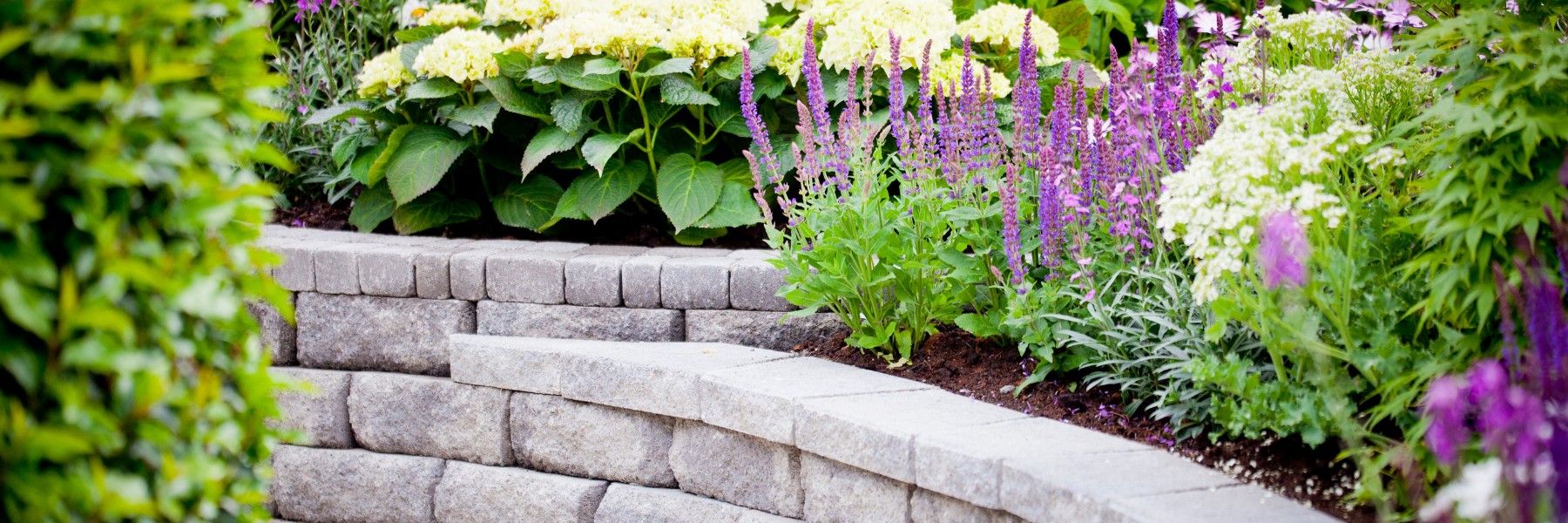
Retaining walls solve practical problems while also adding visual interest. They hold back soil on sloped lots, create terraced planting areas, and turn uneven ground into usable level space. A low wall can also be used as a decorative border for beds or as built-in seating.
Drainage behind the wall is one of the most important design details. Without a plan for water, pressure builds behind the structure and can cause movement over time. Proper base preparation, drainage stone, and sound construction methods help a wall perform for years.
Wall materials range from natural stone to manufactured block, each with its own look and cost. When a wall is paired with a French Drain Installation, you can address both the grade change and the water flow in one coordinated project.
River Rock: Texture, Drainage, and Low Maintenance
River rock is a popular choice for dry creek beds, planting borders, downspout outlets, and areas where grass struggles to grow. Its rounded stones come in a variety of sizes and tones, so you can choose a look that complements your home. Unlike mulch, it does not need frequent replacement.
A dry creek bed is a particularly useful feature in Oklahoma, where heavy downpours can send water rushing across a yard. Directing runoff into a rock-lined channel guides it away from the house while adding an attractive landscape element. Landscape fabric and proper edging underneath help keep the rock in place and limit weed growth.
If you are deciding between these options, a site visit is the easiest way to sort it out. Finer Edge Landscape Group provides free estimates for homes and businesses in Oklahoma City, Edmond, Norman, Yukon, and surrounding communities. We will help you choose the right combination for your property and budget.